healthcare
Thailand Health Insurance After 60
How expat health insurance works in Thailand for over-60s: inpatient vs outpatient, pre-existing conditions, exclusions, and why timing matters.
9 min read · Updated 1 August 2026
Health insurance
The dullest decision you will make, and the one most likely to matter.
Thai private hospitals are fast, modern and comfortable. They are also businesses. A serious admission can produce a bill in the millions of baht, and the time to arrange cover is while you are well — not when you need it.
Information only — not legal, tax, financial, insurance or medical advice.
Thailand’s visa, tax, healthcare and legal rules change, sometimes at short notice. Always confirm anything important with an official source or a qualified professional before you act on it. This page was last reviewed on 1 August 2026.
Tell us roughly what you need and we can put you in front of a broker who compares insurers rather than selling one product.
We do not give regulated insurance advice and we do not recommend a specific policy. We can explain how the system works and introduce you to people who are authorised to advise. See our affiliate disclosure.
What to understand
You are outside the system you grew up with. There is no safety net that catches a large bill for you, and the speed and quality that impress you are the same things that cost money.
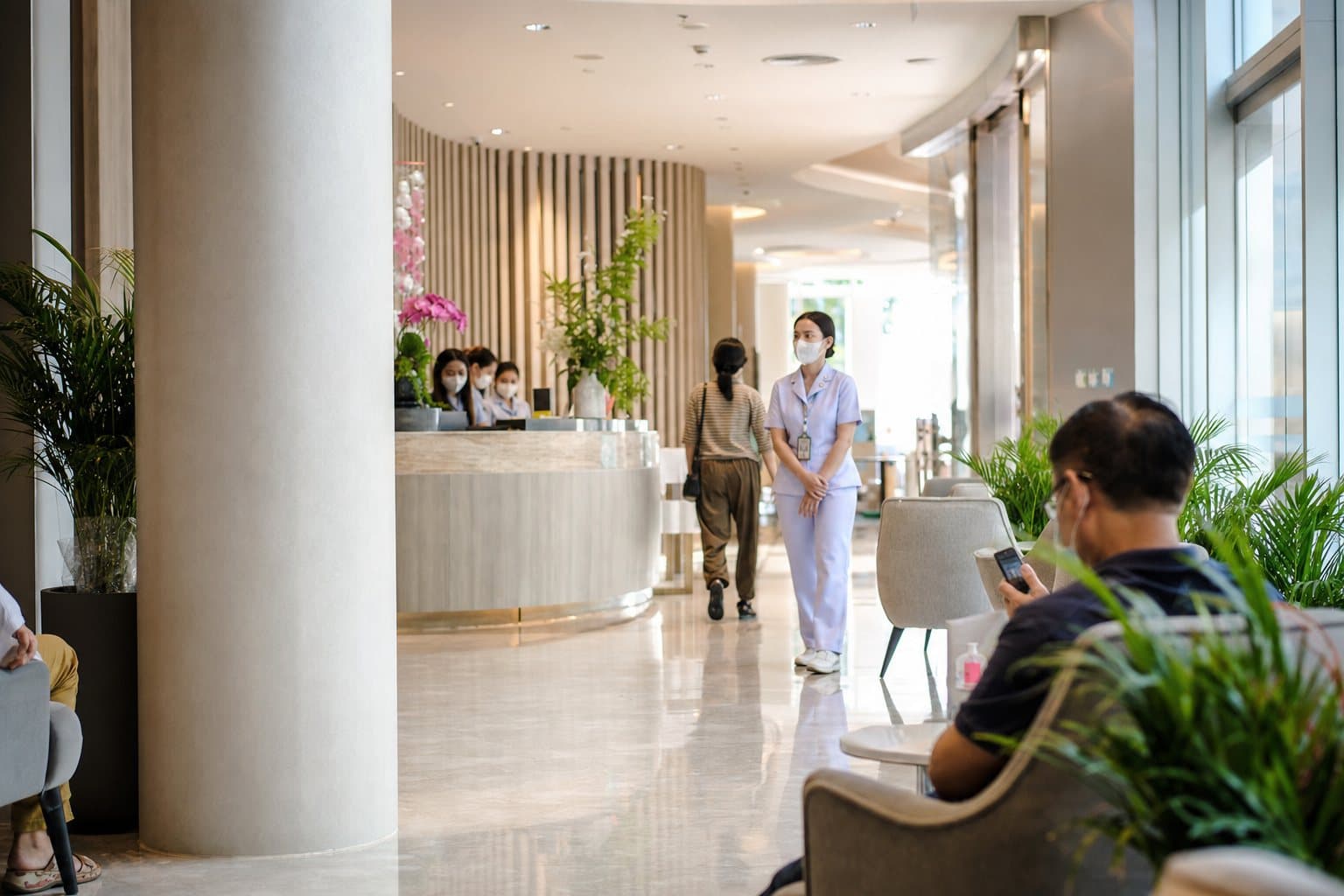
Modern, well equipped, used to foreign patients, and quick. They will ask how you intend to pay before anything non-urgent happens.
Inpatient is the catastrophic protection. Outpatient is the convenience you use most. Buy the first properly before worrying about the second.
Premiums rise with age, sometimes steeply after 70, and many insurers stop accepting new applicants somewhere in the seventies. Continuity is worth a great deal.
Read them before the benefits. Dental, optical, motorbike accidents and certain conditions are commonly excluded — and the motorbike one matters here.
Declare everything, with dates. Excluded, loaded or accepted after a waiting period are all better outcomes than a refused claim.
Questions
Treatment where you are admitted to hospital: surgery, intensive care, and overnight stays. It is the part that produces the very large bills, and it is the core protection most people should buy first.
It is what you use most often — consultations, scans, physiotherapy — but it costs more per pound of cover than inpatient. Many people buy comprehensive inpatient cover with a deductible they could afford, and pay for routine outpatient visits themselves.
It gets harder. Some insurers stop accepting new applicants at a certain age and premiums rise steeply. It is still worth getting quotes — a broker will know which insurers are more accommodating — but do not assume the option will still be there next year.
Yes. Non-disclosure is the most common reason a large claim is refused. A declared condition that is excluded is far better than an undeclared one that voids your policy at the worst possible moment.
Read next
healthcare
How expat health insurance works in Thailand for over-60s: inpatient vs outpatient, pre-existing conditions, exclusions, and why timing matters.
9 min read · Updated 1 August 2026
healthcare
How Thai private hospitals work for foreign patients, realistic cost ranges, and how to register before you ever need treatment.
7 min read · Updated 1 August 2026
healthcare
How to prepare for a medical emergency in Thailand: prescriptions, records, an emergency card, next of kin, and what your neighbours should know.
6 min read · Updated 1 August 2026