healthcare
Hospitals in Thailand: What to Expect and What It Costs
Walking into a Thai private hospital, step by step.
Published 28 February 2026 · Last updated 1 August 2026
Information only — not legal, tax, financial, insurance or medical advice.
Thailand’s visa, tax, healthcare and legal rules change, sometimes at short notice. Always confirm anything important with an official source or a qualified professional before you act on it. This page was last reviewed on 1 August 2026.
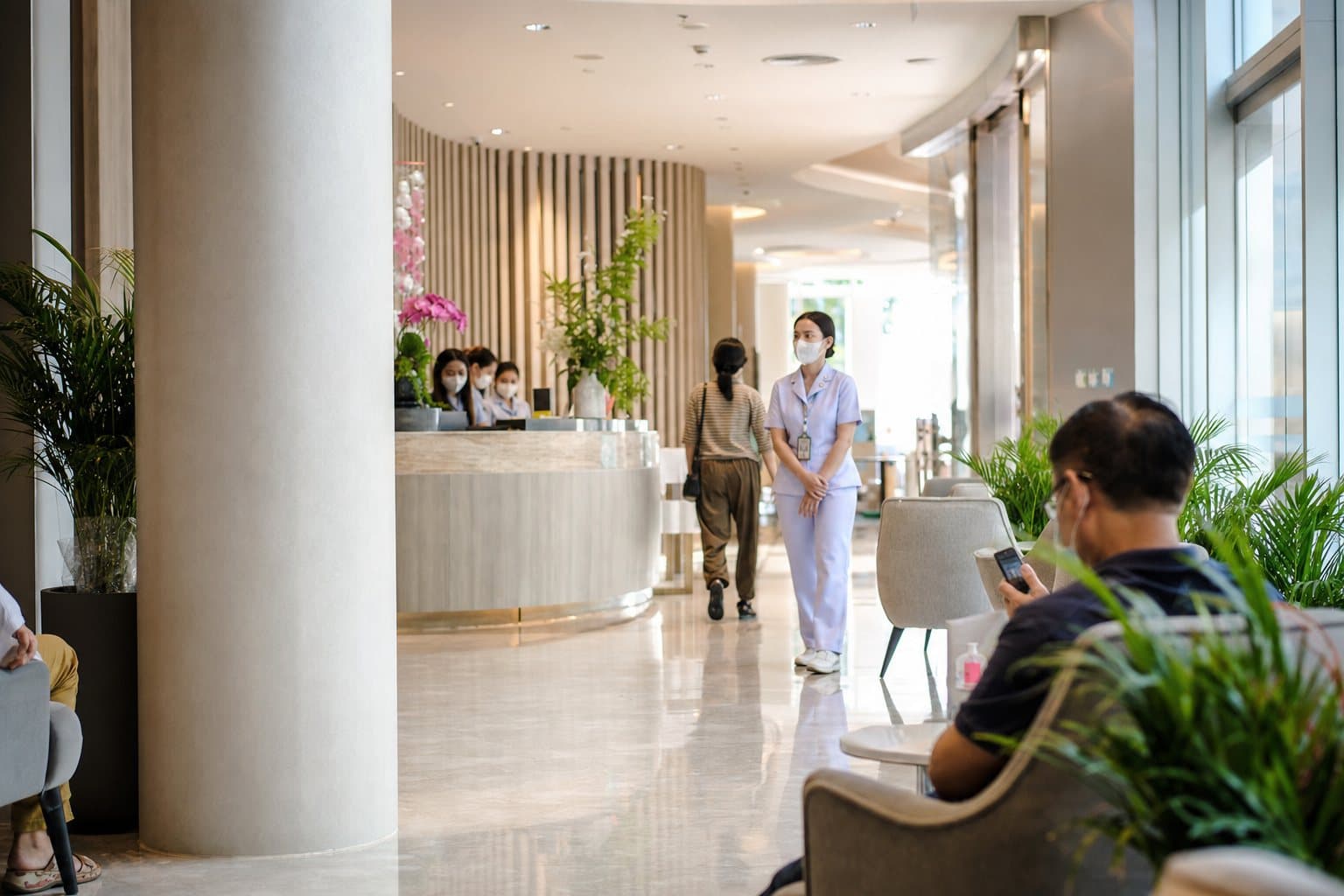
The first visit surprises most people. Thai private hospitals feel closer to a good hotel than to an NHS waiting room, and the speed of access is remarkable. Understanding how they work — including how you pay — removes most of the anxiety.
How a visit works
- You register at reception and are given a hospital number and card. Do this once, while you are well.
- You see a nurse for observations, then a doctor, usually within the hour.
- Tests are typically done in the same building, often the same visit.
- You settle the bill, or the hospital bills your insurer directly if there is an arrangement.
- You collect medication from the hospital pharmacy on the way out.
What things cost
Costs vary enormously between hospitals — an international hospital in Bangkok and a good regional private hospital can differ by a multiple for the same procedure. These are broad planning ranges, not quotes.
| Regional private hospital | Major international hospital | |
|---|---|---|
| Outpatient consultation | 600 – 1,500 | 1,200 – 3,500 |
| Basic blood panel | 1,500 – 4,000 | 3,000 – 9,000 |
| MRI scan | 12,000 – 25,000 | 25,000 – 45,000 |
| Overnight room, standard | 3,000 – 6,000 | 6,000 – 15,000 |
| Major surgery with stay | Six figures | Well into six or seven figures |
The bottom line of that table is the reason this site keeps returning to insurance. Everyday care is affordable. The tail risk is not.
Choosing your hospital
- Distance matters in an emergency — know which hospital an ambulance would take you to.
- Check your insurer's network and whether direct billing is available there.
- Ask about English-speaking staff in the departments you are most likely to need.
- For a serious diagnosis, a second opinion at a larger hospital is normal and sensible.
Sources and official information
We link to primary sources wherever one exists. Rules change — check the official page before acting on anything here.
Read next
healthcare
Thailand Health Insurance After 60
How expat health insurance works in Thailand for over-60s: inpatient vs outpatient, pre-existing conditions, exclusions, and why timing matters.
9 min read · Updated 1 August 2026
healthcare
Hospitals in Pattaya: What Retirees Should Know
An overview of healthcare provision in the Pattaya area for retirees, and how to prepare before you need it.
5 min read · Updated 1 August 2026
healthcare
Emergency Planning: Medication, Records and What to Carry
How to prepare for a medical emergency in Thailand: prescriptions, records, an emergency card, next of kin, and what your neighbours should know.
6 min read · Updated 1 August 2026
Everything in one place
The How to Retire in Thailand Playbook covers visas, money, healthcare, housing and everyday life across 45 chapters, with ten downloadable checklists and planners.
- Instant digital download
- No subscription
- Read on phone, tablet or computer