visas
The Thailand Retirement Visa, Explained Simply
What people call the retirement visa, and how it actually works.
Published 5 February 2026 · Last updated 1 August 2026
Information only — not legal, tax, financial, insurance or medical advice.
Thailand’s visa, tax, healthcare and legal rules change, sometimes at short notice. Always confirm anything important with an official source or a qualified professional before you act on it. This page was last reviewed on 1 August 2026.
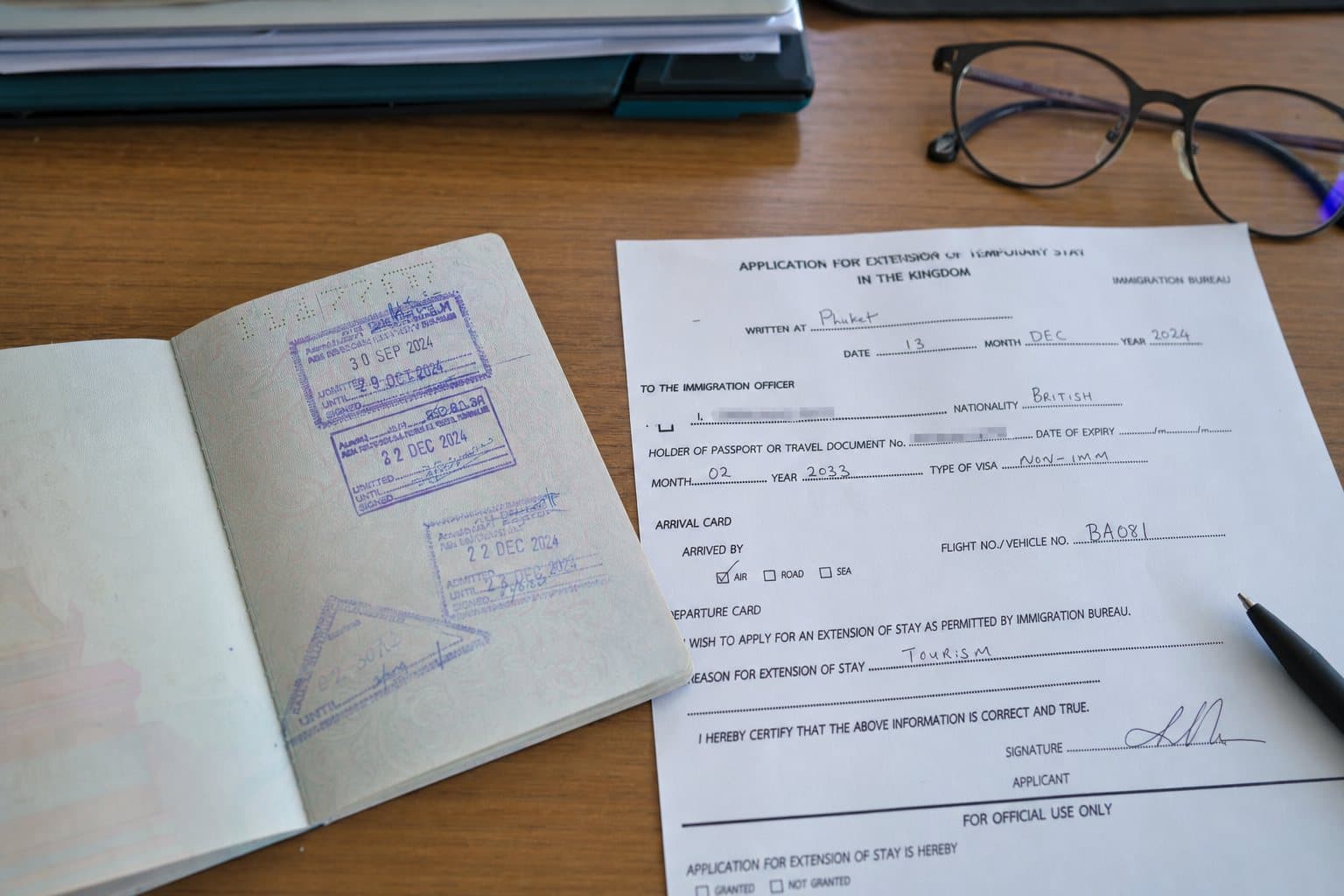
There is no document in Thailand actually called a retirement visa. What people mean is a Non-Immigrant O visa obtained on the grounds of retirement, followed by an annual extension of stay granted by an immigration office inside Thailand. Understanding that distinction makes everything else easier.
The two-part structure
Part one is the visa: permission to enter Thailand for a non-immigrant purpose. You can apply for it at a Thai embassy or consulate before you travel, or in some cases convert to it from another entry once you are in the country.
Part two is the extension of stay: an annual application made at your local immigration office in Thailand, on the grounds of retirement. This is the part you repeat every year, and it is the part that determines where you live in practice, because the office that handles your area is the office you will get to know.
Who can use this route
- You are 50 or over on the date of application.
- You can satisfy the financial requirement in one of the accepted ways.
- You do not intend to work in Thailand on this status.
- You can supply the supporting documents your immigration office asks for.
The age threshold has been stable for a long time. The financial requirement is the part that gets discussed most, because it can be met in more than one way and because the exact figures and seasoning periods are the sort of thing that gets revised.
The financial requirement
Broadly, there are three accepted approaches: a lump sum held in a Thai bank account in your own name, a demonstrable monthly income, or a combination of the two. Each has practical consequences.
| Approach | What it involves | Practical points |
|---|---|---|
| Bank deposit | A set sum held in a Thai bank account in your sole name | Money must usually be seasoned for a period before and maintained after. It is capital you cannot freely use. |
| Monthly income | Evidence of regular income at or above a set monthly level | How income is evidenced varies by nationality; some embassies no longer issue income letters. |
| Combination | Part deposit, part income, totalling an annual figure | Not accepted at every office in the same way. Ask your local office what they want. |
What you take on for the rest of your stay
- An annual extension application, with a fresh set of documents each time.
- 90-day reporting of your address, in person, by post or online.
- A re-entry permit before any trip abroad, or your permission to stay ends when you leave.
- Address reporting if you move, and notification requirements on your landlord's side.
None of this is difficult. All of it is easy to forget, and the penalties for forgetting are avoidable irritations that cost money. Put every date in a calendar the day you get it.
When another route might suit you better
- You are under 50 — look at the DTV, or a marriage route if applicable.
- You still do paid remote work — the retirement route is not designed for that; consider the DTV.
- You have a high pension income and want fewer immigration visits — look at the LTR.
- You would rather pay a fee than meet a financial test — Thailand Privilege exists for exactly that.
Should you use an agent?
A reputable agent or lawyer earns their fee by knowing what your specific immigration office wants this year, and by spotting a problem before you have paid for anything. That is a genuine service, particularly for a first application or an unusual situation.
Be wary of anyone who offers to obtain a status you do not qualify for. That is a different kind of service and it puts your long-term position at risk.
Common questions
Is there an actual visa called the Thailand retirement visa?
No. It is a Non-Immigrant O visa applied for on the grounds of retirement, followed by annual extensions of stay granted inside Thailand.
Do I need health insurance for this route?
Insurance requirements differ between the retirement routes and have changed over time — the O-A route in particular has carried a cover requirement. Confirm what applies to your specific application type before you buy a policy.
Can I work on a retirement extension?
No. This route is not intended for employment in Thailand. If you intend to keep earning, look at the DTV or a route that includes a work permit.
What happens if I leave Thailand?
Leaving without a valid re-entry permit ends your permission to stay, even if your extension has months left on it. Get the re-entry permit before you travel.
Sources and official information
We link to primary sources wherever one exists. Rules change — check the official page before acting on anything here.
Read next
visas
The Destination Thailand Visa (DTV), Explained
How the DTV works — the workcation route, the Thai soft power route and the dependant route — and whether it suits an older long-stay visitor.
9 min read · Updated 1 August 2026
visas
90-Day Reporting, Re-entry Permits and Extensions
What 90-day reporting involves, why re-entry permits matter, and how to keep your annual extension straightforward.
5 min read · Updated 1 August 2026
visas
The LTR Visa for Wealthy Pensioners
How Thailand's Long-Term Resident visa works for retirees, what the Wealthy Pensioner category involves, and who it genuinely suits.
6 min read · Updated 1 August 2026
Everything in one place
The How to Retire in Thailand Playbook covers visas, money, healthcare, housing and everyday life across 45 chapters, with ten downloadable checklists and planners.
- Instant digital download
- No subscription
- Read on phone, tablet or computer